

Direct Compression Tablet Binders: How to Simplify Tablet Production From Day One
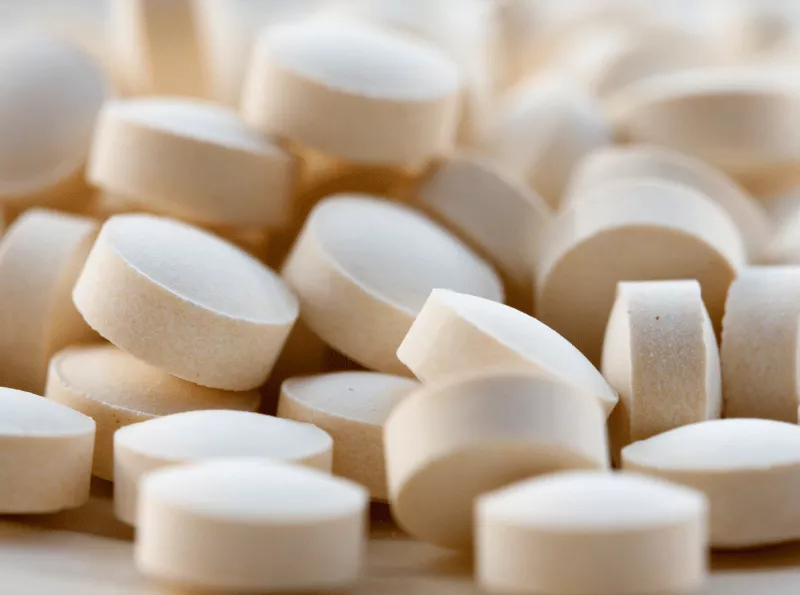
Direct compression often serves as a starting point for tablet manufacturing because it reduces processing steps and shortens setup time. The process can appear simple, but it places greater demands on excipient performance and formulation design. Small choices made in early development can have a direct impact on tablet quality and press performance.
In direct compression, there are limited opportunities to correct issues later in the process. As a result, binder selection becomes a critical decision. The binder influences particle bonding, powder flow into the die, and tablet strength under short dwell times. When the binder doesn’t work well with the formulation or equipment, variability and inefficiency can appear quickly.
Selecting a suitable direct compression tablet binder from the start can simplify tablet production and improve consistency from the first run. For manufacturers building or refining a direct compression process, binder choice is one of the most effective ways to achieve predictable, repeatable results.
Why Direct Compression is Appealing and Where It Gets Challenging
Direct compression is often chosen because it simplifies the tablet manufacturing process. Compared to granulation, it eliminates multiple processing steps such as wetting, drying, and milling. This reduces overall process complexity and shortens development timelines.
With fewer steps, setup is typically faster. Manufacturers can move from blend to compression more quickly, which is especially useful during R&D, pilot batches, and small production runs. Equipment requirements are also reduced, leading to lower upfront costs compared to granulation-based processes.
At the same time, direct compression places greater demands on excipients. Because there are no intermediate steps to improve flow or binding, each component must perform well as-is. Small formulation mismatches can appear immediately during compression, often showing up as inconsistent tablet quality or unstable press operation.
For this reason, excipient selection, particularly binder choice, carries more weight in direct compression than in other tableting methods. Small decisions can have a measurable impact on both process stability and final tablet quality.
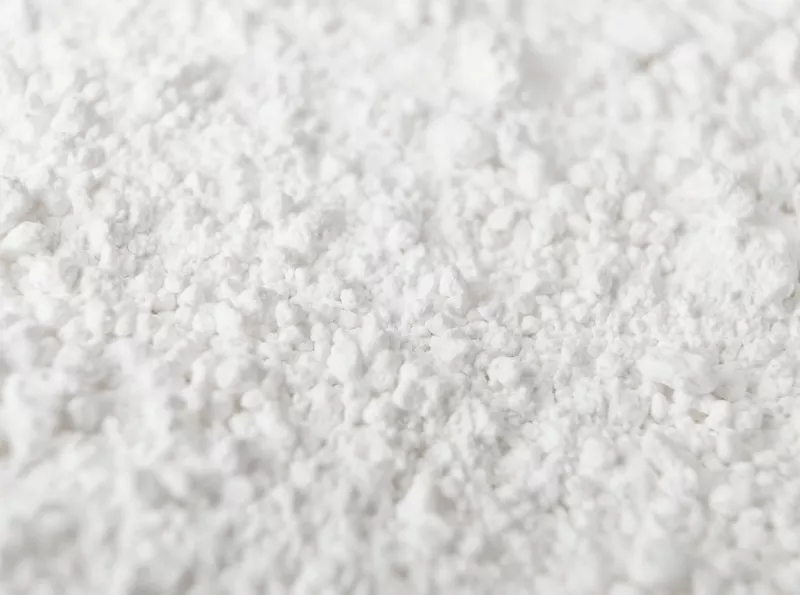
What a Binder Needs to Do in Direct Compression
In direct compression, the binder has to perform multiple functions at once. With no granulation step to improve material behavior, the binder plays a central role in how reliably tablets form on the press.
A direct compression tablet binder should:
-
Support particle bonding under limited dwell time. During compression, particles have only a short time under pressure to bond. The binder must promote strong interparticle bonding within that limited window to help tablets form as a stable, unified structure.
-
Promote consistent flow into the die. Even die fill depends on how well the powder blend flows. A suitable binder helps improve blend flowability, reducing variation in die fill and supporting more consistent tablet weight from tablet to tablet.
-
Help produce strong tablets without excessive force. Applying higher compression force is not always the solution. The binder should support tablet strength at moderate forces to reduce stress on the press, tooling, and formulation.
When these requirements are met, direct compression becomes more predictable. Press settings are easier to determine, tablet quality is more consistent, and fewer adjustments are needed during a run.
Why Binder Choice Matters More in Direct Compression Than Other Methods
With direct compression, fewer process steps mean fewer chances to correct issues later. In granulation, flow and binding can be improved through additional processing. In direct compression, performance is largely determined by the behavior of the blend as it enters the tablet press.
The binder carries more responsibility due to this. It must support particle bonding, flow, and compression behavior at the same time. If the binder is not well suited to the formulation or press, those limitations become visible immediately during compression.
Binder choice has a direct effect on press efficiency. A predictable binder allows the press to run smoothly with fewer interruptions and less need for constant adjustments. It also supports consistency across runs, helping manufacturers achieve similar tablet weight, hardness, and appearance from batch to batch.
For operators, especially those new to tablet manufacturing, this predictability matters. A well-chosen binder reduces the amount of trial and error required during setup and helps build confidence in both the process and the equipment.
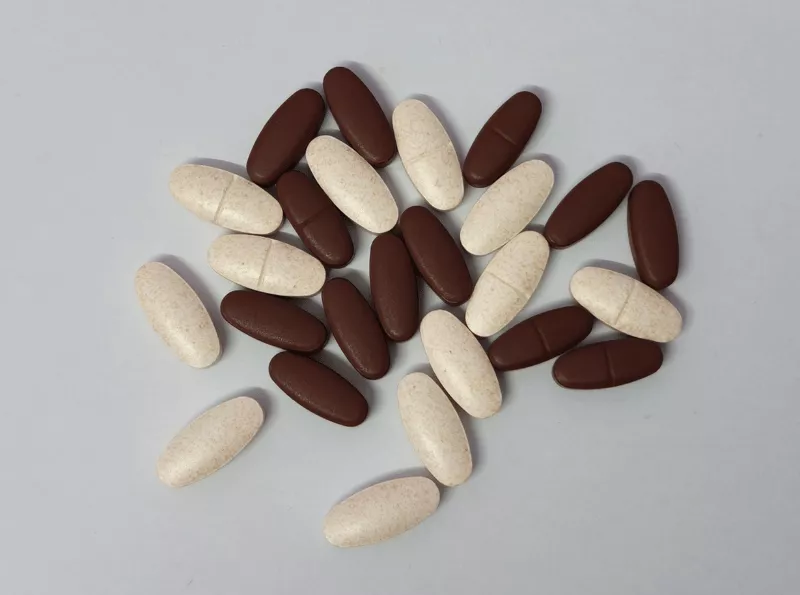
Common Binder Approaches Used in Direct Compression
Direct compression does not depend on a single type of binder. Manufacturers use a range of binder approaches depending on the formulation, dose size, and production goals. Each type of binder offers different advantages and trade-offs in direct compression applications.
Understanding the common binder approaches used in direct compression can help manufacturers make more informed formulation decisions and set realistic expectations during development and scale-up.
Cellulose-Based Binders
Cellulose-based binders, such as microcrystalline cellulose, are commonly used in direct compression due to their compressibility and broad compatibility with many formulations. They help promote particle bonding and are often selected for their reliability across a range of active ingredients.
They tend to work well in formulations where moderate binding strength is needed and where flow characteristics are already acceptable or can be managed with additional excipients. Many manufacturers are familiar with cellulose-based binders, which makes them a common starting point.
For beginners, limitations can appear when flow is inconsistent or when higher tablet strength is required. In these cases, additional formulation adjustments may be needed to achieve stable compression, which can add complexity during early development.
Sugar-Based Binders
Sugar-based binders, like Fructose DC, Sorbitol DC, and Dextrose DC, are often used in formulations where compressibility and tablet appearance are important. They can support good tablet formulation and are commonly found in applications where taste and mouthfeel are major factors of the tablet.
In direct compression, flow and particle size distribution become important considerations when using sugar-based binders. Variability in these properties can affect die fill and weight consistency, especially in smaller tablet presses.
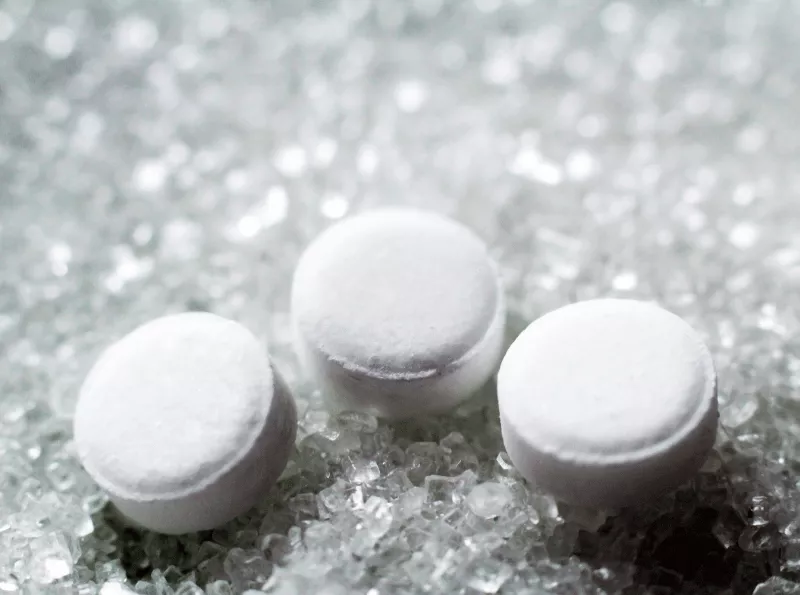
Polymer and Synthetic Binders
Polymer and synthetic binders, such as polyvinylpyrrolidone (PVP), are used in formulations that require specific performance characteristics, such as enhanced binding strength or controlled tablet properties. These binders can be tailored to meet particular formulation needs.
In direct compression, polymer-based binders can provide strong bonding, but they may introduce trade-offs. Compression behavior, lubrication requirements, or sensitivity to press settings can vary depending on the material
For manufacturers, especially those new to direct compression, these binders may require more careful evaluation during development to ensure consistent performance across production runs.
When an All-in-One Binder Makes Sense
In some direct compression workflows, simplicity is the goal. Rather than combining multiple excipients to address flow, binding, and compression behavior separately, some manufacturers look for a single binder that can support several functions at once.
An all-in-one-binder may make sense when the priority is to:
-
Reduce Formulation Complexity: Fewer excipients can make formulations easier to manage, document, and adjust during development.
-
Limit Trial and Error During Setup: Using a binder designed to perform multiple roles can reduce the number of variables that needs to be adjusted on the press.
-
Achieve Consistent Results More Quickly: Predictable binder behavior can help stabilize tablet quality earlier in the development process.
This approach is often especially useful for:
-
First-Time Tablet Manufacturers: Teams still learning compression benefit from formulations that are easier to dial in and maintain.
-
R&D and Pilot-Scale Production: Short runs and frequent changeovers favor excipients that perform consistently with minimal adjustment.
-
Small Teams with Limited Press Time: When operator time and machine availability are constrained, reducing setup and troubleshooting can have a measurable impact.
How Firmapress© Fits into Direct Compression Workflows
Firmapress© is a tablet binder developed to support direct compression by addressing several formulation needs at once. It is designed to promote particle bonding, support consistent flow, and produce strong tablets without excessive compression force.
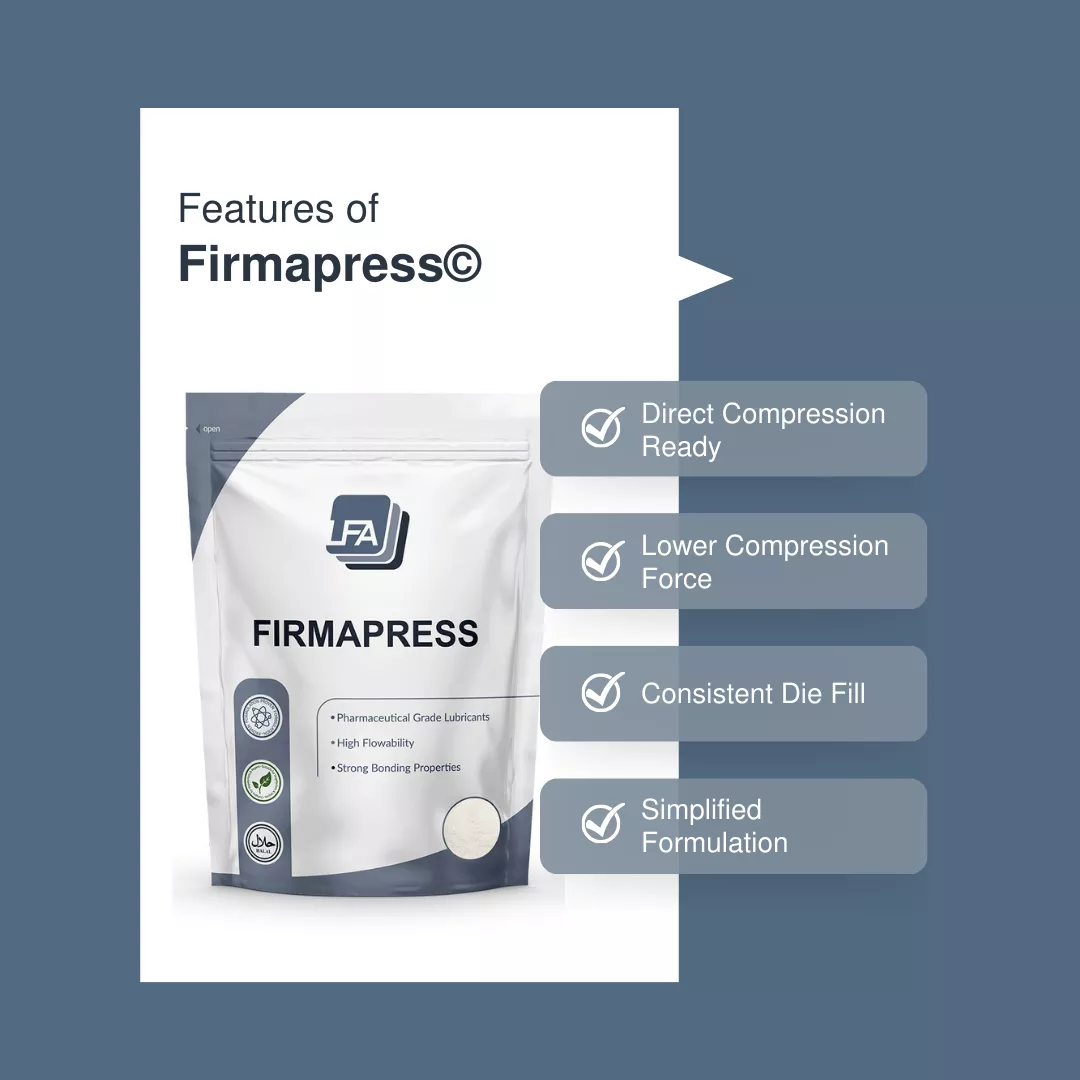
In direct compression workflows, Firmapress© can help simplify formulation design by reducing the need to combine multiple excipients to achieve stable compression behavior. This can be especially useful when developing new formulations or working with limited material during early production stages.
Manufacturers often consider Firmapress© when they are looking for:
-
More predictable tablet strength across runs
-
Improved flow into the die, particularly on smaller presses
-
Reduced setup time and fewer adjustments during compression
By supporting consistent compression behavior, Firmapress© can help manufacturers focus more on process control and scale-up planning, rather than repeated formulation changes during early development.
Choosing a Binder That Grows With Your Process
Binder selection is not just about getting a formulation to compress into a tablet. It also impacts how easily that formulation can scale as production needs change. A binder that works during early development should continue to perform as batch sizes increase and press conditions change.
For manufacturers starting with direct compression, this means thinking beyond the first successful run. As production scales, dwell time, compression force, and feed behavior can change. Binder performance that is inconsistent across press sizes or operating speeds can introduce variability later, even if early trials were successful.
Deciding on a binder that performs dependably across different stages of the tablet compression process can help reduce the need for reformulation during scale-up. It also supports more consistent tablet quality when moving from desktop equipment to larger rotary tablet presses.
For small teams and growing manufacturers, this continuity matters. It reduces development time, limits repeated validation work, and helps maintain confidence in the process as production demands increase.
Get Guidance on Binder Selection for Direct Compression
Choosing the right binder is one of the most effective ways to simplify direct compression and improve consistency early in tablet production. It also plays a key role in how well a formulation performs as processes scale and production demands change.
LFA works with manufacturers at every stage of tablet development, from first-time compression to ongoing production. By considering both formulation needs and tablet press performance, it’s possible to make binder decisions that reduce trial and error and support long-term process stability.
If you’re evaluating binder options for direct compression or looking to simplify your current process with Firmapress©, talking through your formulation and equipment requirements can help clarify the best path forward. Talk to our team of tableting experts today to get started.